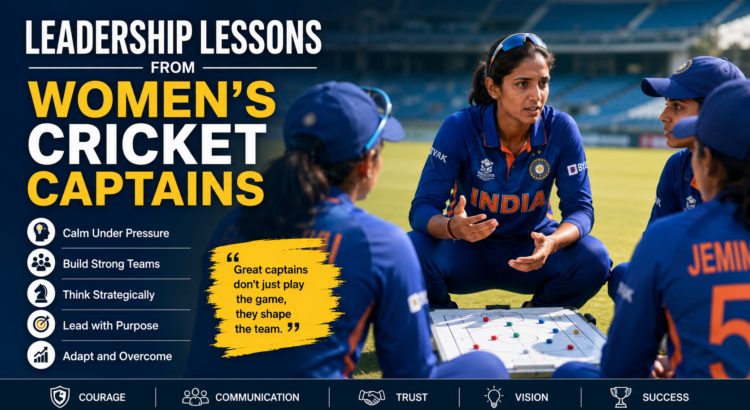
Leadership Lessons From Women’s Cricket Captains
Women’s cricket has evolved into more than just a competitive sport. It has become a strong case study for modern leadership, teamwork, and decision-making under pressure. The leadership styles of women’s cricket captains are now being widely discussed across professional platforms, career advisory content, and sports communities.
After analyzing multiple perspectives from leadership discussions, social insights, and career-focused articles—including insights from LinkedIn thought leadership posts, motivational social content, and cricket-based leadership comparisons—a clear pattern emerges: women’s cricket captains represent a balanced model of grit, emotional intelligence, and purpose-driven leadership.
This article breaks down those insights into practical leadership lessons that apply beyond the cricket field.
Understanding Leadership in Women’s Cricket
Leadership in women’s cricket is not limited to tactical decisions like field placements or batting orders. It is deeply connected to how captains manage pressure, maintain team morale, and guide players through uncertainty.
Discussions such as those highlighted in leadership-focused content like
LinkedIn Leadership Insights
emphasize that modern captains are expected to lead with purpose, not just authority. The idea of “grit with clarity” has become a defining trait of successful women leaders in cricket.
Similarly, visual and community-driven platforms like
Instagram Motivation Post
reflect how leadership moments in cricket inspire audiences with messages of resilience, teamwork, and mental strength.
Leadership Lesson 1: Calmness Under Pressure Is a Superpower
One of the strongest leadership traits seen in women’s cricket captains is their ability to stay calm in high-pressure situations. Whether defending a low total or chasing a difficult target, panic is rarely visible in their decision-making.
This calm approach allows better clarity in strategy and helps the entire team stay focused. In leadership terms, this is called emotional regulation, and it is one of the most valuable skills in both sports and corporate environments.
A similar leadership style is often associated with MS Dhoni, whose calm decision-making approach has influenced many modern leaders. Career analysis platforms like
Foundit Gulf Leadership Article
highlight how staying composed in uncertainty leads to better long-term outcomes.
Leadership Lesson 2: Purpose-Driven Leadership Creates Strong Teams
Women’s cricket captains often lead with a strong sense of purpose. They are not just focused on winning matches but also on building team identity, confidence, and long-term development.
This purpose-driven mindset helps create a stable team culture where every player understands their role clearly. It also reduces internal conflict and increases trust among team members.
Leadership discussions across professional networks consistently highlight that purpose-driven leaders inspire more commitment than authority-based leaders.
Leadership Lesson 3: Grit Defines Long-Term Success
Grit is one of the most repeated themes in leadership analysis of women’s cricket. It refers to the combination of passion and persistence over time, even in the face of repeated setbacks.
Women captains often lead teams through rebuilding phases, injuries, or challenging tournaments. Their ability to stay committed despite results is what separates average leadership from exceptional leadership.
This quality is not only important in sports but also in business environments where long-term consistency matters more than short-term success.
Leadership Lesson 4: Decision-Making in Real Time Matters Most
Cricket is a fast-changing game. Conditions shift, momentum swings, and opposition strategies evolve quickly. Women captains are required to make decisions in real time without hesitation.
This strengthens their ability to:
- Analyze situations quickly
- Adjust strategies instantly
- Trust team instincts
- Balance risk and reward
Such decision-making skills are highly valued in corporate leadership, where leaders must often act with incomplete information.
Leadership Lesson 5: Team Culture Builds Winning Mindsets
Another major takeaway from observing women’s cricket leadership is the importance of team culture. Captains play a key role in ensuring that every player feels valued, regardless of performance.
This inclusive leadership approach creates psychological safety within the team. Players perform better when they are confident that mistakes will not lead to criticism but to learning opportunities.
Community discussions like those found in sports groups such as
Facebook Cricket Leadership Community
often highlight how strong leadership culture directly impacts match performance and long-term team success.
Leadership Lesson 6: Adaptability Is the Modern Leadership Skill
Adaptability is another key trait seen in women’s cricket captains. No two matches are the same, and no single strategy guarantees success.
Great captains adjust their plans based on:
- Pitch conditions
- Opponent strengths
- Match situation
- Player form
This flexibility is also critical in modern workplaces where industries change rapidly due to technology, competition, and global trends.
Why These Leadership Lessons Matter Beyond Cricket
The leadership style seen in women’s cricket is increasingly being recognized in business, education, and organizational development. It combines:
- Emotional intelligence
- Strategic thinking
- Resilience
- Communication skills
- Team empowerment
These are exactly the qualities required in today’s leadership landscape.
These themes are widely covered across sports analysis platforms like
ICC Cricket Official
and professional cricket analysis sites such as
ESPN Cricinfo Analysis
FAQs
1. What makes women’s cricket captains effective leaders?
They combine emotional intelligence, calm decision-making, and strong team management skills, which help them handle pressure effectively.
2. How does cricket captaincy relate to real-world leadership?
Both require quick decision-making, strategic planning, adaptability, and the ability to lead teams under pressure.
3. Why is calmness important in leadership?
Calm leaders make better decisions, reduce team stress, and improve overall performance during critical situations.
4. What is the biggest leadership takeaway from women’s cricket?
Building strong team culture and leading with purpose are the most important lessons.
5. Can sports leadership skills be used in business?
Yes, skills like teamwork, adaptability, and strategic thinking are highly valuable in business environments.
Final Thought
Women’s cricket captains represent a modern leadership model built on balance—balancing emotion with logic, aggression with patience, and strategy with adaptability. Their leadership shows that success is not just about winning matches but about building teams that trust, adapt, and grow together.
As women’s cricket continues to expand globally, its captains will remain powerful examples of how leadership is truly defined—not by authority, but by clarity, consistency, and purpose.