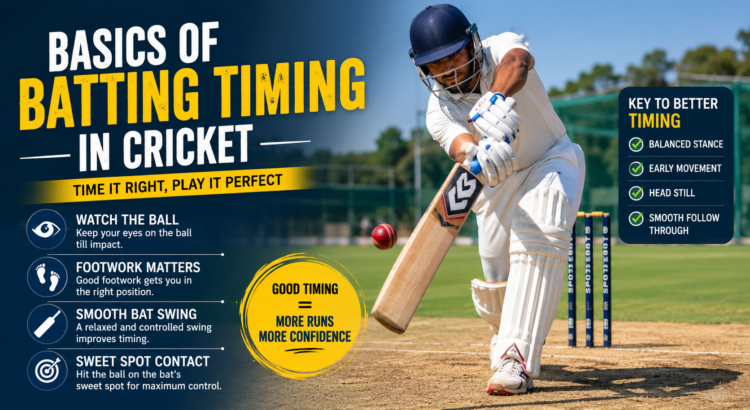
Basics of Batting Timing in Cricket
Cricket batting is not just about power. The best batters in the world make batting look effortless because of one crucial skill—timing. Whether it is a perfectly placed cover drive or a straight drive racing to the boundary, good timing allows a batter to score runs without relying solely on strength.
For beginners and experienced players alike, understanding the basics of batting timing can significantly improve shot quality, consistency, and overall performance. In this guide, we will explore what batting timing is, why it matters, and how you can improve it through proper technique and practice.
What Is Batting Timing in Cricket?
Batting timing refers to the ability to connect the bat with the ball at the right moment. When a batter meets the ball perfectly, maximum energy is transferred from the bat to the ball, resulting in a clean and powerful shot.
Good timing is not about swinging harder. Instead, it is about synchronizing your body movement, bat swing, and the ball’s arrival. Even a lightly hit shot can travel to the boundary if the timing is perfect.
According to insights from modern cricket training methods, proper timing also involves hitting the ball from the bat’s sweet spot, where energy transfer is most efficient.
Why Batting Timing Is Important
Timing plays a major role in a batter’s success because it helps:
- Generate power without excessive effort.
- Improve shot placement.
- Reduce the chances of mistimed catches.
- Increase scoring opportunities.
- Build confidence at the crease.
Many professional cricketers rely more on timing than brute force. Players like Virat Kohli and Kane Williamson are excellent examples of batters who consistently score through precise timing and technique.
Key Factors That Affect Batting Timing
1. Hand-Eye Coordination
One of the most important aspects of timing is hand-eye coordination. A batter must accurately track the ball from the bowler’s hand and react quickly.
Improving visual tracking and reaction speed helps players judge line, length, and pace more effectively.
2. Footwork
Good footwork allows a batter to get into the correct position before playing a shot. Poor footwork often leads to mistimed strokes because the body is not balanced at the moment of impact.
Effective footwork helps batters:
- Reach the ball comfortably.
- Maintain balance.
- Transfer weight correctly.
- Play both front-foot and back-foot shots confidently.
3. Balanced Batting Stance
A balanced stance creates a solid foundation for timing. Players should stand comfortably with:
- Feet shoulder-width apart.
- Knees slightly bent.
- Head still and aligned with the ball.
- Weight evenly distributed.
A stable stance improves reaction time and allows smoother movement toward the ball.
4. Bat Grip
Holding the bat too tightly can restrict bat speed and reduce flexibility. A relaxed but controlled grip enables a smoother swing and better timing.
The top hand should guide the bat, while the bottom hand provides support and controlled power.
5. Watching the Ball Closely
One of the simplest yet most effective batting principles is to keep your eyes on the ball until impact.
Many timing issues occur because players look up too early or focus on the field rather than the ball itself.
Common Mistakes That Ruin Batting Timing
Even talented players can struggle with timing because of a few common errors:
Playing Too Early or Too Late
Misjudging the speed of the delivery often causes batters to play shots before or after the ideal contact point.
Overcommitting with the Front Foot
Moving too far forward can disturb balance and make it difficult to adjust to swing or bounce.
Poor Head Position
If the head falls outside the line of the ball, timing becomes inconsistent and shot control decreases.
Excessive Power
Trying to hit every ball hard usually results in mistimed shots. Good batters focus on technique first and power follows naturally.
Batting Drills to Improve Timing
Shadow Batting
Shadow batting involves practicing batting movements without a ball. It helps develop muscle memory and improves bat swing mechanics.
Throw-Down Practice
A coach or teammate throws balls from a short distance, allowing the batter to focus solely on timing and technique.
Front Foot Drive Drill
This drill helps players practice balance, weight transfer, and timing while playing attacking shots.
Focus on:
- Stepping toward the ball.
- Keeping your head over the line of the shot.
- Maintaining a smooth bat swing.
Reaction Ball Drills
Using tennis balls or reaction balls can improve reflexes and hand-eye coordination, which directly impact batting timing.
Bowling Machine Practice
A bowling machine provides consistent deliveries at different speeds and lengths, helping batters refine timing under realistic conditions.
The Role of Mental Focus
Timing is not only physical—it is also mental. Successful batters remain calm and focused at the crease.
Mental habits that improve timing include:
- Watching the ball carefully.
- Avoiding premeditated shots.
- Staying relaxed under pressure.
- Building confidence through repetition.
The more composed a player is, the easier it becomes to judge deliveries accurately.
How Technology Helps Improve Batting Timing
Modern cricket training has introduced advanced tools that provide data on bat speed, impact quality, and shot consistency.
Organizations such as the International Cricket Council (ICC) continue to promote the use of performance analysis and technology to improve player development.
Players can also learn more about batting fundamentals and coaching resources through the Marylebone Cricket Club (MCC) Coaching Resources, one of cricket’s most respected authorities.
FAQs
What is the most important factor in batting timing?
Hand-eye coordination and watching the ball closely are among the most important factors. Without proper ball tracking, timing becomes difficult regardless of technique.
Can batting timing be improved?
Yes. Consistent practice, footwork drills, throw-down sessions, and reaction training can significantly improve batting timing over time.
Why do professional batters make batting look effortless?
Professional batters rely on timing, balance, and technique rather than pure strength. Their ability to meet the ball at the perfect moment creates effortless power.
Does footwork affect batting timing?
Absolutely. Good footwork helps players reach the ball in balance, making it easier to time shots accurately.
How often should I practice timing drills?
Ideally, players should include timing-focused drills in every training session. Even 15–20 minutes of dedicated practice can produce noticeable improvements.
Final Thoughts
Batting timing is one of the most valuable skills a cricketer can develop. While power can help, perfectly timed shots are often more effective and consistent. By improving hand-eye coordination, maintaining balance, refining footwork, and practicing regularly, any batter can enhance their timing and become more confident at the crease.
Remember, great batting is not about hitting the ball harder—it is about meeting it at exactly the right moment.