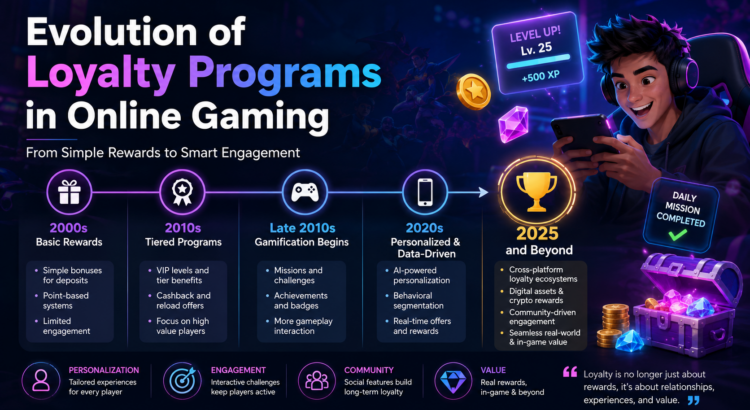
How Loyalty Programs Evolved in Online Gaming
The online gaming industry has undergone a massive transformation over the past decade, and one of the most significant changes is the evolution of loyalty programs. What started as simple reward systems offering points or basic bonuses has now become a sophisticated ecosystem focused on engagement, personalization, gamification, and long-term retention.
With billions of gamers worldwide and a rapidly growing mobile-first audience, loyalty programs are no longer just marketing tools—they are now a core part of the gaming experience. In 2025, brands and gaming platforms are rethinking how rewards work to match modern player expectations.
From Simple Rewards to Smart Engagement Systems
In the early stages of online gaming, loyalty programs were basic. Players were rewarded for spending time or money with simple perks like bonus coins, free spins, or limited-time offers. These systems were heavily transactional and lacked emotional engagement.
However, as highlighted in industry research, traditional loyalty models struggled because they were rigid, generic, and short-term focused. They often treated all users the same, regardless of behavior or preferences, leading to low retention and weak engagement .
Modern gaming loyalty systems have shifted from “earn and burn” models to experience-driven engagement platforms, where the focus is not just on spending but on interaction, activity, and community participation.
The Rise of Gamification in Loyalty Programs
One of the biggest changes in online gaming loyalty programs is the integration of gamification. Instead of passive reward collection, users now actively participate in missions, challenges, and progression-based systems.
Features such as:
- XP (experience points) systems
- Tier-based progression levels
- Daily missions and challenges
- Achievement badges and rewards
These mechanics make loyalty programs feel like part of the game itself.
According to recent industry analysis, gamified loyalty structures improve engagement by turning passive users into active participants, increasing retention and satisfaction significantly .
This shift has also helped brands create a sense of achievement and emotional connection, which traditional point-based systems failed to deliver.
Mobile Gaming Changed Everything
Mobile gaming has played a major role in reshaping loyalty programs. With billions of mobile gamers worldwide, especially in Asia-Pacific, loyalty systems had to become more accessible and flexible.
Research shows that gaming audiences are no longer limited to young male players. Today’s gamers include:
- Casual mobile players
- Gen X and millennial users
- Female gamers (a significant percentage globally)
- Social and community-driven players
This diversity forced companies to rethink loyalty design strategies. Instead of focusing only on competitive or “core” gamers, modern systems now include social engagement rewards, casual play incentives, and inclusive reward structures .
Integration of Real-World Value and Digital Currency
Another major evolution is the integration of loyalty points with real-world and in-game economies. Today, many platforms allow players to convert loyalty points into:
- In-game currency
- Exclusive skins or items
- Battle passes
- Digital collectibles
This creates a seamless bridge between gaming engagement and real-world value.
Some ecosystems even allow loyalty programs from industries like banking, retail, and telecom to connect with gaming platforms, turning rewards into usable digital assets across games .
This shift transforms loyalty from a simple reward system into a cross-industry engagement ecosystem.
Personalization: The Key Driver of Modern Loyalty
One of the biggest weaknesses of traditional loyalty programs was the lack of personalization. In 2025, personalization is at the center of every successful loyalty strategy.
Modern systems now use data-driven insights to:
- Offer personalized missions
- Recommend game-based rewards
- Adjust difficulty levels based on user behavior
- Provide real-time incentives
Instead of one-size-fits-all rewards, gaming platforms now create individualized engagement journeys for each player.
This approach increases emotional connection and makes players feel valued, rather than just “another user in the system.”
Community and Social Engagement as Loyalty Drivers
Gaming is no longer a solo activity—it is a social experience. Loyalty programs have adapted by introducing community-based rewards such as:
- Guild or team-based missions
- Social leaderboards
- Referral rewards
- Community achievements
These features encourage players to stay active not just for rewards, but for belonging and recognition.
As highlighted by industry experts, modern loyalty is shifting from transactional rewards to community-driven engagement models that build long-term emotional loyalty.
Challenges in Modern Loyalty Systems
Despite all advancements, loyalty programs in gaming still face challenges:
- User fatigue from too many reward systems
- Security risks like account fraud and credential stuffing
- Over-reliance on short-term incentives
- Difficulty maintaining long-term engagement
Many experts also argue that loyalty programs fail when they rely only on discounts or points without improving the core user experience.
This means gaming companies must balance rewards with actual gameplay quality to maintain real loyalty.
The Future of Loyalty in Online Gaming
Looking ahead, loyalty programs will continue to evolve into fully interactive ecosystems. Key trends include:
- AI-driven personalized rewards
- Blockchain-based reward ownership
- Real-time adaptive loyalty systems
- Cross-platform reward integration
- Deeper social and community mechanics
The future of loyalty is not just about rewards—it is about creating continuous digital experiences that keep players engaged across platforms and ecosystems.
Final Thought
Loyalty programs in online gaming have evolved far beyond simple point collection systems. What started as basic incentives has now become a powerful combination of gamification, personalization, digital economy integration, and community engagement.
In 2025, the most successful gaming platforms are those that treat loyalty not as a marketing tool, but as a core part of the user experience. As gaming continues to expand globally, loyalty programs will play an even bigger role in shaping how players interact, engage, and stay connected with digital ecosystems.
FAQs
1. What are loyalty programs in online gaming?
Loyalty programs are reward systems that incentivize players with points, bonuses, or digital rewards for engagement, gameplay, or spending.
2. How have gaming loyalty programs changed over time?
They have evolved from simple point-based systems to gamified, personalized, and experience-driven engagement platforms.
3. Why is gamification important in loyalty programs?
Gamification increases user engagement by adding challenges, progression systems, and interactive rewards that make the experience more enjoyable.
4. What is the role of personalization in loyalty programs?
Personalization ensures rewards and experiences are tailored to individual player behavior, increasing retention and satisfaction.
5. What is the future of loyalty programs in gaming?
The future includes AI-driven personalization, cross-platform rewards, blockchain integration, and deeper community-based engagement systems.