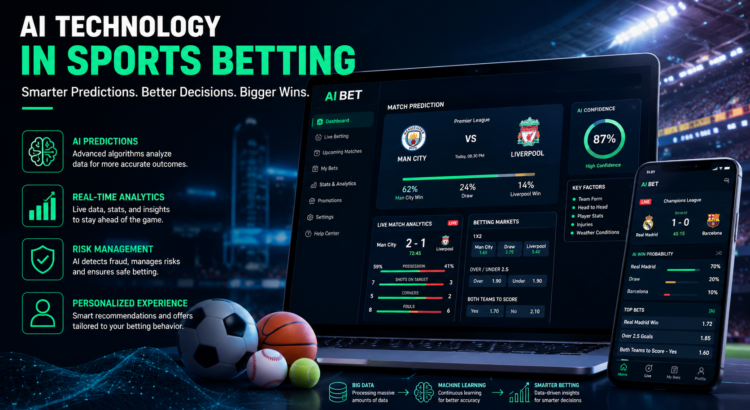
AI Technology in Sports Betting
Artificial Intelligence (AI) is transforming industries around the world, and sports betting is no exception. From predicting match outcomes to improving user experiences, AI technology is reshaping how betting platforms operate and how bettors make decisions. In recent years, sports books and online betting companies have started using advanced AI models, machine learning algorithms, and real-time analytics to gain a competitive advantage in a rapidly growing market.
As technology continues to evolve, AI in sports betting is becoming more accurate, efficient, and personalized. This innovation is not only helping operators reduce risks but also giving bettors access to smarter insights and data-driven predictions.
What Is AI in Sports Betting?
AI in sports betting refers to the use of machine learning, predictive analytics, and automated systems to analyze sports data and generate betting insights. These systems can process massive amounts of information within seconds, including player statistics, team performance, weather conditions, injury reports, historical records, and live match data.
Traditional betting strategies relied heavily on human judgment and manual analysis. AI changes this approach by using algorithms that continuously learn from new data. This allows betting platforms to improve prediction accuracy over time and provide more reliable odds to users.
According to industry reports from Italia’s and other technology platforms, AI-powered systems can identify hidden patterns in sports data that humans may miss. This gives sports books a better understanding of betting trends and market behaviour.
How AI Improves Prediction Accuracy
One of the biggest advantages of AI technology in sports betting is improved prediction accuracy. AI models analyse thousands of data points before generating predictions. These systems evaluate factors such as:
- Team form and recent performance
- Player injuries and suspensions
- Head-to-head records
- Weather conditions
- Home and away statistics
- Real-time in-game events
Machine learning algorithms continuously update predictions based on live data. For example, during a football match, AI can instantly adjust betting odds after a red card, injury, or tactical change.
Some modern AI systems are also using Generative AI to simulate different match outcomes and probability scenarios. This helps sportsbooks offer dynamic odds and more personalized betting suggestions.
For users, this means better-informed betting decisions and a more strategic approach to wagering.
Personalized Betting Experience
AI is also improving the overall user experience in online sports betting platforms. Betting companies use AI-powered recommendation engines to understand user behavior and preferences.
If a bettor frequently places wagers on football matches or cricket tournaments, AI systems can recommend relevant markets, betting options, and promotions based on their interests. This level of personalization helps platforms increase user engagement and customer satisfaction.
Additionally, AI catboats and virtual assistants are now widely used in betting apps. These tools provide instant customer support, answer betting-related questions, and guide users through the platform efficiently.
Major technology companies like IBM and Google are also contributing to AI advancements in sports analytics and predictive modelling, further influencing the sports betting ecosystem.
Real-Time Data and Live Betting
Live betting, also known as in-play betting, has become one of the fastest-growing segments in the gambling industry. AI plays a major role in making live betting more accurate and responsive.
During live events, AI systems process real-time match data within milliseconds. They monitor player movements, scoring opportunities, possession statistics, and game momentum to adjust betting odds instantly.
For example, in basketball or football, AI can detect changes in team performance and automatically update probabilities for match outcomes. This allows sports books to offer real-time betting opportunities with greater precision.
The use of AI in live betting also reduces manual workload for operators and improves market efficiency.
Fraud Detection and Risk Management
Another important use of AI technology in sports betting is fraud detection and risk management. Betting platforms deal with large financial transactions every day, making security a top priority.
AI systems can identify suspicious betting patterns, detect unusual activities, and prevent fraudulent behavior. Machine learning models analyze user behavior and transaction history to recognize potential risks before they become major problems.
This technology also helps sportsbooks reduce losses caused by match-fixing or coordinated betting manipulation. AI can monitor betting markets and flag irregular activities in real time.
As online gambling regulations become stricter worldwide, AI-based compliance systems are becoming essential for licensed betting operators.
The Role of Big Data in Sports Betting
AI relies heavily on big data to function effectively. Sports betting platforms collect enormous amounts of structured and unstructured data from matches, players, social media, and betting markets.
Big data analytics helps AI systems identify trends and patterns that improve prediction models. The more data an AI model receives, the smarter and more accurate it becomes.
For example, AI can analyze years of cricket match statistics to predict batting performance under specific pitch conditions. Similarly, in football betting, AI can evaluate tactical formations and player chemistry to estimate scoring probabilities.
This combination of AI and big data is revolutionizing modern sports betting strategies.
Challenges and Ethical Concerns
Despite its advantages, AI in sports betting also raises certain challenges and ethical concerns. One major issue is responsible gambling. Highly personalized betting recommendations may encourage excessive gambling behavior among users.
There are also concerns about data privacy and transparency. Bettors may not fully understand how AI systems generate predictions or influence betting odds.
Additionally, AI predictions are not always perfect. Sports events remain unpredictable, and unexpected outcomes can still occur despite advanced analytics.
Regulators and betting companies must work together to ensure that AI technology is used responsibly and ethically within the gambling industry.
Future of AI in Sports Betting
The future of AI in sports betting looks extremely promising. As machine learning models become more advanced, prediction accuracy is expected to improve even further.
Emerging technologies such as computer vision, deep learning, and generative AI may completely transform sports analytics in the coming years. AI-powered virtual sports, automated betting assistants, and hyper-personalized experiences could become standard features in the industry.
Experts also predict that AI will play a larger role in esports betting, where real-time data and digital environments create new opportunities for advanced analytics.
With the rapid growth of online betting platforms worldwide, AI technology will continue to shape the future of the gambling industry.
Final Thoughts
AI technology is changing the sports betting industry in remarkable ways. From accurate predictions and live betting analysis to fraud detection and personalized experiences, AI is helping both betting operators and users make smarter decisions.
While challenges related to ethics and responsible gambling still exist, the benefits of AI-driven innovation cannot be ignored. As technology evolves, AI will likely become an even more powerful force in sports betting, offering faster insights, better accuracy, and improved user experiences.
For bettors, understanding how AI works can provide valuable insights into modern betting strategies and help them make more informed decisions in an increasingly competitive market.
FAQs
How is AI used in sports betting?
AI is used in sports betting to analyze large amounts of sports data, predict match outcomes, adjust live betting odds, detect fraud, and personalize user experiences.
Can AI predict sports results accurately?
AI can improve prediction accuracy by analyzing historical and real-time data, but no system can guarantee 100% accurate sports predictions because sports remain unpredictable.
What is the role of machine learning in betting?
Machine learning allows AI systems to learn from past data and improve betting predictions over time without manual programming.
Is AI making sports betting safer? Yes, AI helps sportsbooks detect fraud, monitor suspicious activities, and improve security systems for safer betting environments
What is the future of AI in sports betting?
The future of AI in sports betting includes advanced predictive models, personalized betting experiences, smarter live betting systems, and deeper integration with big data analytics.