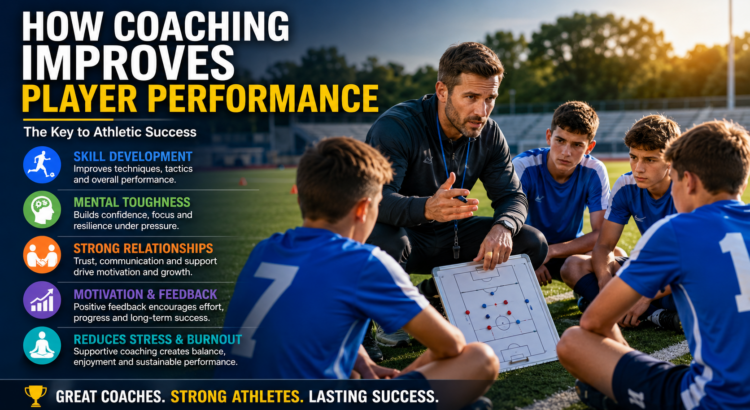
How Coaching Improves Player Performance: The Key to Athletic Success
In every sport, talent alone is rarely enough to achieve long-term success. Behind every high-performing athlete is a coach who provides guidance, motivation, technical expertise, and emotional support. Coaching is much more than teaching skills; it is about shaping an athlete’s mindset, building confidence, and creating an environment where players can consistently perform at their best.
Research in sports psychology and athlete development shows that effective coaching has a direct impact on player performance. From improving technical abilities to strengthening mental toughness, coaches play a crucial role in helping athletes unlock their full potential.
The Connection between Coaching and Performance
A coach serves as a mentor, strategist, and leader. Their influence extends beyond training sessions and competitions. Studies have found that positive coaching behaviors can significantly improve athlete performance by strengthening the coach-athlete relationship and reducing psychological fatigue.
When athletes trust their coaches, they are more likely to remain motivated, follow training programs consistently, and stay focused on their goals. This positive relationship creates a foundation for long-term growth and competitive success.
According to research published by the National Center for Biotechnology Information (NCBI), coaching leadership behaviors such as training guidance, social support, democratic decision-making, and positive feedback are all associated with improved athletic performance.
Technical Skill Development through Coaching
One of the most visible ways coaching improves performance is through skill development. Coaches analyze an athlete’s strengths and weaknesses and create personalized training plans to address specific areas for improvement.
Effective coaching helps athletes:
- Master fundamental techniques
- Improve tactical awareness
- Correct performance errors
- Develop consistency under pressure
- Adapt to different competitive situations
Rather than relying on repetitive practice alone, coaches provide structured feedback that accelerates learning and helps athletes make measurable progress.
Building Mental Toughness
Physical ability can only take an athlete so far. In competitive sports, mental strength often separates good players from great ones.
Research from Binghamton University highlights the strong connection between coaching leadership and athlete mental toughness. Athletes who receive supportive and effective coaching are more likely to develop resilience, confidence, and the ability to perform under pressure.
Mental toughness allows athletes to:
- Recover from setbacks quickly
- Stay focused during competition
- Manage stress effectively
- Maintain confidence after mistakes
- Perform consistently in high-pressure situations
Coaches help build these qualities by creating challenging but supportive training environments that encourage growth and self-belief.
The Importance of the Coach-Athlete Relationship
The relationship between a coach and athlete is one of the most important factors influencing performance.
A strong coach-athlete relationship is built on:
- Trust
- Respect
- Open communication
- Shared goals
- Emotional support
When athletes feel valued and understood, they are more engaged in training and more willing to push beyond their comfort zones.
Studies show that positive coach-athlete relationships not only improve motivation but also reduce psychological fatigue, allowing athletes to maintain higher levels of performance over longer periods.
Motivation and Positive Feedback
Motivation is a key driver of athletic success. Even highly talented players can struggle without encouragement and direction.
Great coaches understand how to keep athletes motivated through constructive feedback and recognition of progress. Positive feedback reinforces good habits and helps athletes stay committed to their development journey.
According to sports psychology experts at Peak Sports, successful coaches focus on process-oriented feedback rather than simply emphasizing results. This approach encourages athletes to concentrate on continuous improvement rather than short-term outcomes.
As a result, athletes develop a stronger growth mindset and become more resilient when facing challenges.
Reducing Psychological Fatigue
Athletes often face intense physical and mental demands. Excessive pressure, burnout, and emotional exhaustion can negatively affect performance.
Research indicates that effective coaching can significantly reduce psychological fatigue by providing:
- Emotional support
- Clear communication
- Structured training plans
- Realistic expectations
- Healthy recovery strategies
When coaches create a positive training environment, athletes experience lower stress levels and greater enjoyment in their sport. This balance helps maintain long-term performance and overall well-being.
Leadership Styles That Enhance Performance
Different coaching styles influence athletes in different ways. However, certain leadership behaviors consistently produce positive results.
Democratic Leadership
Democratic coaches encourage athlete participation in decision-making. This increases engagement, confidence, and personal responsibility.
Training and Instruction Leadership
These coaches focus on skill development, technical guidance, and performance improvement through structured learning.
Social Support Leadership
Supportive coaches prioritize athlete well-being and foster strong interpersonal relationships within the team.
Positive Feedback Leadership
Athletes perform better when coaches recognize effort, progress, and achievements through constructive feedback.
Research suggests that combining these leadership approaches creates the most effective environment for athlete development and performance enhancement.
Why Great Coaches Create Great Athletes
Many elite athletes credit their success to the guidance of exceptional coaches. While natural ability provides a starting point, coaching helps athletes maximize their potential.
A great coach provides:
- Technical expertise
- Strategic planning
- Emotional support
- Performance analysis
- Confidence-building techniques
- Long-term development strategies
By addressing both physical and psychological aspects of performance, coaches help athletes achieve sustainable success rather than temporary results.
Frequently Asked Questions (FAQs)
How does coaching improve athletic performance?
Coaching improves performance by enhancing technical skills, building mental toughness, increasing motivation, and creating structured development plans tailored to individual athletes.
Why is the coach-athlete relationship important?
A strong coach-athlete relationship builds trust, improves communication, reduces stress, and increases athlete commitment to training and competition goals.
Can coaching improve mental toughness?
Yes. Effective coaching helps athletes develop resilience, confidence, focus, and emotional control, all of which contribute to greater mental toughness.
What coaching style is most effective?
Research suggests that a combination of democratic leadership, social support, technical instruction, and positive feedback produces the best results for athlete development.
How do coaches help prevent athlete burnout?
Coaches help reduce burnout by providing emotional support, managing training loads, promoting recovery, and maintaining a positive training environment.
Final Thoughts
Coaching is one of the most powerful influences on athlete development and performance. Beyond teaching techniques and strategies, coaches shape an athlete’s mindset, confidence, and ability to handle challenges. Strong leadership, positive feedback, and supportive coach-athlete relationships create an environment where athletes can thrive both physically and mentally.
As sports continue to evolve, the role of coaching becomes even more important. Athletes who receive effective coaching are better equipped to improve their skills, overcome obstacles, and achieve lasting success in their chosen sport.