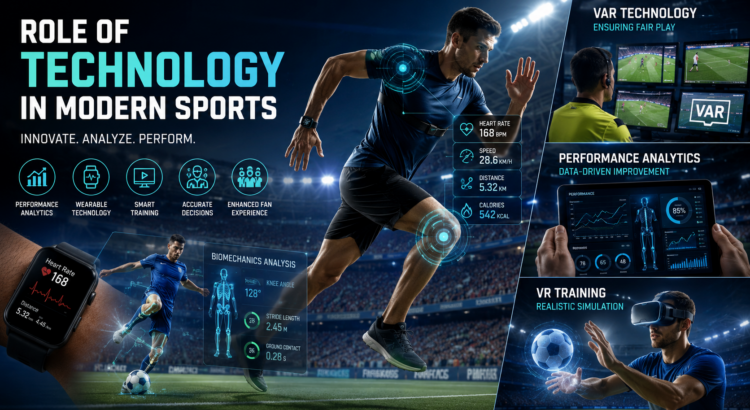
Role of Technology in Modern Sports
Technology has become an integral part of modern sports, revolutionizing the way athletes train, compete, and recover. From advanced wearable devices and performance analytics to video-assisted refereeing systems, sports technology is reshaping every aspect of the sporting ecosystem. What was once limited to stopwatches and basic fitness equipment has evolved into a data-driven industry powered by artificial intelligence, sensors, and real-time analytics.
Today, technology is not only helping athletes achieve peak performance but is also improving decision-making, enhancing fan engagement, and creating a more inclusive sporting environment. As innovation continues to accelerate, the relationship between sports and technology is becoming stronger than ever.
What Is Sports Technology?
Sports technology refers to the application of scientific knowledge, digital tools, and innovative equipment to improve athletic performance, sports management, training, officiating, and fan experiences. According to the International Academy of Sport Science and Technology (AISTS), Sportstech covers a wide range of solutions, including wearable devices, smart equipment, data analytics platforms, virtual reality systems, and broadcasting technologies.
The primary goal of sports technology is to make sports more efficient, accurate, entertaining, and accessible for everyone involved.
Enhancing Athlete Performance Through Data Analytics
One of the biggest contributions of technology in sports is performance analysis. Modern athletes and coaches rely heavily on data-driven insights to improve training methods and achieve competitive advantages.
Wearable devices such as fitness trackers, GPS monitors, and smartwatches collect valuable information related to heart rate, speed, distance covered, sleep quality, and recovery patterns. These insights help coaches design personalized training programs and prevent overtraining.
Advanced analytics platforms use artificial intelligence and machine learning to identify strengths, weaknesses, and performance trends. As highlighted by the World Intellectual Property Organization (WIPO), wearable technology has evolved from elite sports applications to mainstream fitness and health monitoring, making performance optimization more accessible than ever before.
Improving Fairness and Accuracy in Officiating
Technology has significantly improved the fairness of sports competitions by reducing human errors in officiating. Several sports now rely on advanced review systems to ensure accurate decisions.
One of the most notable examples is the Hawk-Eye system, which uses multiple high-speed cameras to track ball movement and assist referees and umpires in making accurate calls. Initially introduced in cricket, Hawk-Eye is now widely used in tennis, football, and other sports.
Similarly, technologies such as Video Assistant Referee (VAR), goal-line technology, and instant replay systems help officials review controversial moments and maintain the integrity of the game. These innovations have increased transparency and strengthened trust among athletes, teams, and fans.
Revolutionizing Training with Smart Technologies
Traditional training methods are being transformed through the use of virtual reality (VR), augmented reality (AR), and simulation technologies.
Virtual reality allows athletes to practice game situations in a controlled environment without physical risk. For example, football players can improve decision-making skills through simulated match scenarios, while racing drivers can practice tracks using immersive VR systems.
Smart training equipment equipped with sensors can provide instant feedback on movement patterns, technique, and biomechanics. This real-time analysis helps athletes make quick adjustments and continuously improve their performance.
The integration of technology into training has made preparation more efficient, personalized, and scientifically driven.
Enhancing Fan Engagement and Sports Entertainment
Technology has also transformed how fans experience sports. Modern broadcasting innovations provide viewers with high-definition visuals, multiple camera angles, real-time statistics, and interactive experiences.
Social media platforms, mobile applications, and streaming services allow fans to connect with their favorite teams and athletes anytime and anywhere. Features such as live match analytics, instant highlights, and personalized content have significantly increased audience engagement.
Emerging technologies like augmented reality and virtual reality are creating immersive viewing experiences, allowing fans to feel closer to the action than ever before. These developments are helping sports organizations build stronger relationships with global audiences.
Supporting Athlete Health and Injury Prevention
Athlete health and safety have become major priorities in modern sports. Technology plays a crucial role in monitoring physical conditions and preventing injuries.
Wearable sensors can track workload, fatigue levels, hydration, and recovery metrics. Medical teams use this data to identify potential injury risks before they become serious problems.
Biomechanical analysis systems help evaluate movement efficiency and detect harmful patterns that may lead to injuries. Additionally, modern rehabilitation technologies support faster recovery and more effective treatment plans.
By combining sports science with digital innovation, organizations can better protect athletes and extend their careers.
Promoting Inclusivity Through Sports Innovation
Technology is making sports more accessible for athletes with disabilities. Innovations such as advanced prosthetics, adaptive sports equipment, and specialized wheelchairs have expanded participation opportunities in competitive sports.
Research highlighted by WIPO shows significant growth in parasports technology, including innovations designed to improve performance, accessibility, and safety. These advancements not only benefit elite para-athletes but also contribute to broader accessibility solutions that improve quality of life for millions of people worldwide.
The Future of Technology in Sports
The future of sports technology looks incredibly promising. Artificial intelligence, predictive analytics, smart wearables, robotics, and connected devices are expected to become even more influential.
Future innovations may provide deeper performance insights, more accurate injury predictions, and enhanced fan experiences. The increasing use of AI-powered systems will likely help teams make smarter decisions while improving athlete development and competition management.
As technology continues to evolve, sports organizations must balance innovation with ethical considerations such as data privacy, fairness, and accessibility.
Final Thoughts
Technology has fundamentally transformed modern sports, influencing everything from athlete performance and injury prevention to officiating and fan engagement. The integration of data analytics, wearable devices, artificial intelligence, and advanced review systems has created a more competitive, fair, and entertaining sporting environment.
As innovation continues to advance, technology will remain a driving force behind the future of sports. Organizations that embrace these developments will be better positioned to enhance performance, improve decision-making, and deliver exceptional experiences for athletes and fans alike.
Frequently Asked Questions (FAQs)
1. What is sports technology?
Sports technology refers to the use of innovative tools, equipment, software, and scientific methods to improve athletic performance, training, officiating, and fan engagement.
2. How does technology improve athlete performance?
Technology helps athletes by providing real-time performance data, personalized training insights, recovery monitoring, and injury prevention solutions.
3. What is Hawk-Eye technology?
Hawk-Eye is a camera-based tracking system used in sports such as cricket and tennis to assist officials in making accurate decisions.
4. How do wearable devices benefit athletes?
Wearable devices monitor metrics such as heart rate, speed, distance, sleep quality, and recovery, helping athletes optimize performance and reduce injury risks.
5. What is the future of technology in sports?
The future includes greater use of artificial intelligence, predictive analytics, smart wearables, virtual reality training, and enhanced fan engagement technologies.